The lighthouse gets the photograph. The coast deserves the time.
The red-and-white Cape Agulhas Lighthouse is one of those places you recognise before you arrive.
And yes, you should see it.
Built from local limestone in the nineteenth century, it remains the second-oldest working lighthouse in southern Africa. Seventy-one steps lead to the top, and the building also houses a lighthouse museum.
But Cape Agulhas becomes much more interesting when you continue beyond it.
Walk to the Southernmost Tip
This is the real geographic milestone.
A cairn marks the official southernmost point of the African continent at 34°49′58″S, 20°00′12″E. SANParks identifies this longitude as the official meeting point of the Atlantic and Indian oceans.
It is wonderfully understated.
Rock.
Wind.
Fynbos.
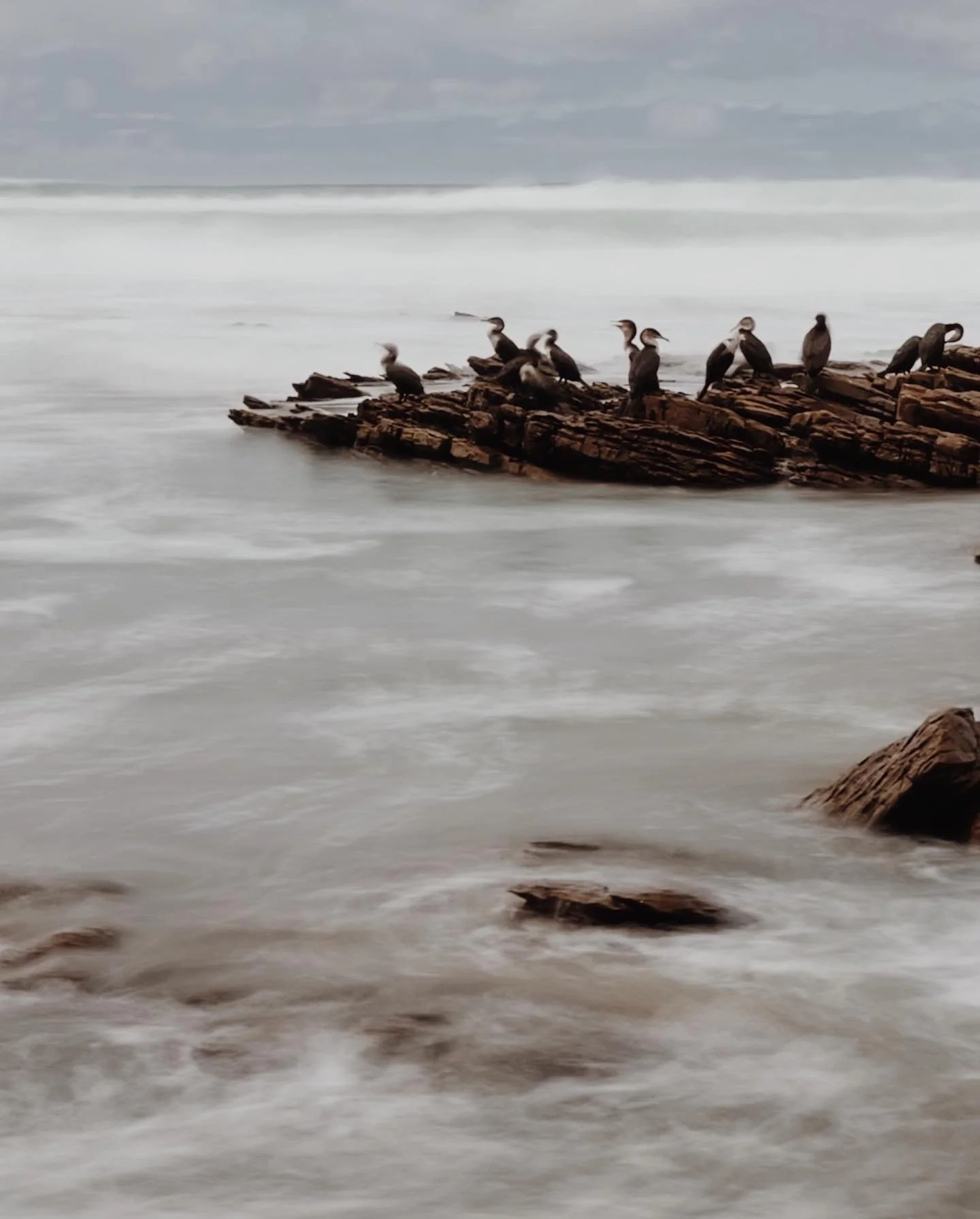
Open ocean.
Standing there feels considerably more significant than the monument itself suggests.
And perhaps that is why we like it.
Look for the Map of Africa
Along the coastal boardwalk you'll also find the large stone Map of Africa Monument.
Rather than another conventional tourist marker, the work references the continent itself and creates a surprisingly contemplative pause beside the coast. SANParks describes it as a symbolic representation of Africa integrated into the landscape at its southernmost edge.
Give it a little more time than the photograph requires.
Remember that this was once a dangerous coast
Cape Agulhas has a long maritime history, and the lighthouse exists for a reason.
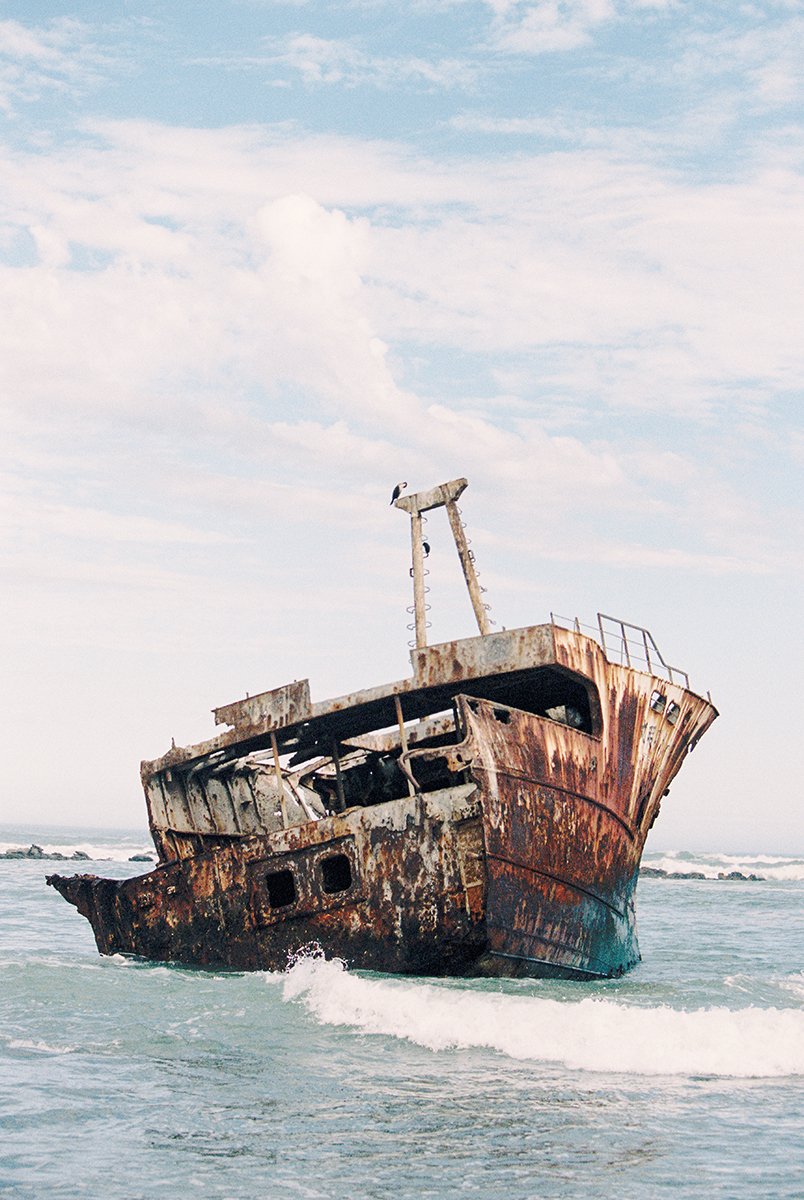
The coastline became notorious for wrecks, and names such as the Zoetendal, Birkenhead and Arniston remain part of the region’s maritime story. The remains of the Meisho Maru 38 can still be seen along the Cape Agulhas coastline.
It changes the way you look at the ocean.
Beautiful, yes.
But never entirely tame.
Then simply walk
Not every Cape Agulhas experience needs a monument attached to it.
Agulhas National Park protects coastal fynbos, shoreline and heritage sites across this extraordinary southern landscape. Hiking, birding, seasonal whale watching and coastal exploration are all part of the park experience.
Our preference?
Leave a little unplanned time.
Walk further than the lighthouse.
Look back.
And let the Southern Tip feel like a place rather than a destination pin.